
Industrial Stretch Film Types
Flexible Packaging Film for Palletizing, Load Stabilization, and Shipping
Stretch film is a flexible packaging material used to bundle products and cartons, reduce load shifting on pallets, and help maintain package integrity during storage and shipping. Its stretching capacity, recovery properties, and puncture resistance affect the wrapping force and how securely the load is held in place.
Sina Ambalaj stretch film options are evaluated for different packaging volumes and application methods. From manual wrapping operations to facilities using pallet-wrapping machines, selecting the appropriate film thickness and wrapping method is important. Product selection should consider not only the micron rating but also the film’s actual stretching performance and consumption per wrapped pallet.
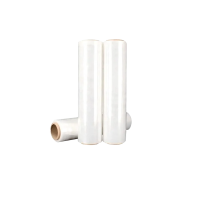
Hand Stretch Film and Machine Stretch Film Solutions
Selection Based on Film Thickness, Stretch Performance, and Wrapping Method
Hand stretch film: Used in warehouses, shipping, and packaging operations where wrapping is performed manually. The tension applied by the operator, the number of wrapping layers, and the shape of the load affect load stabilization performance.
Machine stretch film: Designed for use with pallet-wrapping machines and selected according to the machine’s pre-stretch and wrapping capabilities. Machine compatibility, film breakage behavior, and the required level of load stabilization should be evaluated.
Pallet wrapping stretch film: Helps keep cartons, packages, and products together on a pallet. It is used to improve load stability, particularly during warehouse handling and transportation, and to reduce the risk of products shifting.
Stretch Film Types, Micron Selection, and Pallet-Wrapping Applications
Stretch film is an elastic plastic packaging material that helps hold cartons and products together on a pallet. Used during storage, loading, and shipping, it helps keep products organized on pallets and reduces the risk of loads shifting during transport.
When selecting stretch film, the intended application method should first be determined. Hand stretch film is considered for operations involving manual wrapping, while machine stretch film is used on automatic or semi-automatic pallet-wrapping lines. In machine applications, the pre-stretch ratio, wrapping speed, and load geometry can affect film performance.
The micron rating indicates the film’s thickness, but it does not determine durability or consumption performance on its own. The film formulation, stretching behavior, puncture resistance, applied wrapping force, and the shape of the load’s corners should also be considered. A thinner film is not necessarily more economical in every situation, just as a thicker film is not always the best choice for every application.
When requesting stretch film from Sina Ambalaj, specify whether the film will be applied manually or by machine, the pallet dimensions, the approximate product weight, whether the load has sharp edges, and the preferred micron range. This information helps evaluate suitable stretch film alternatives and estimate consumption per wrapped pallet more accurately.